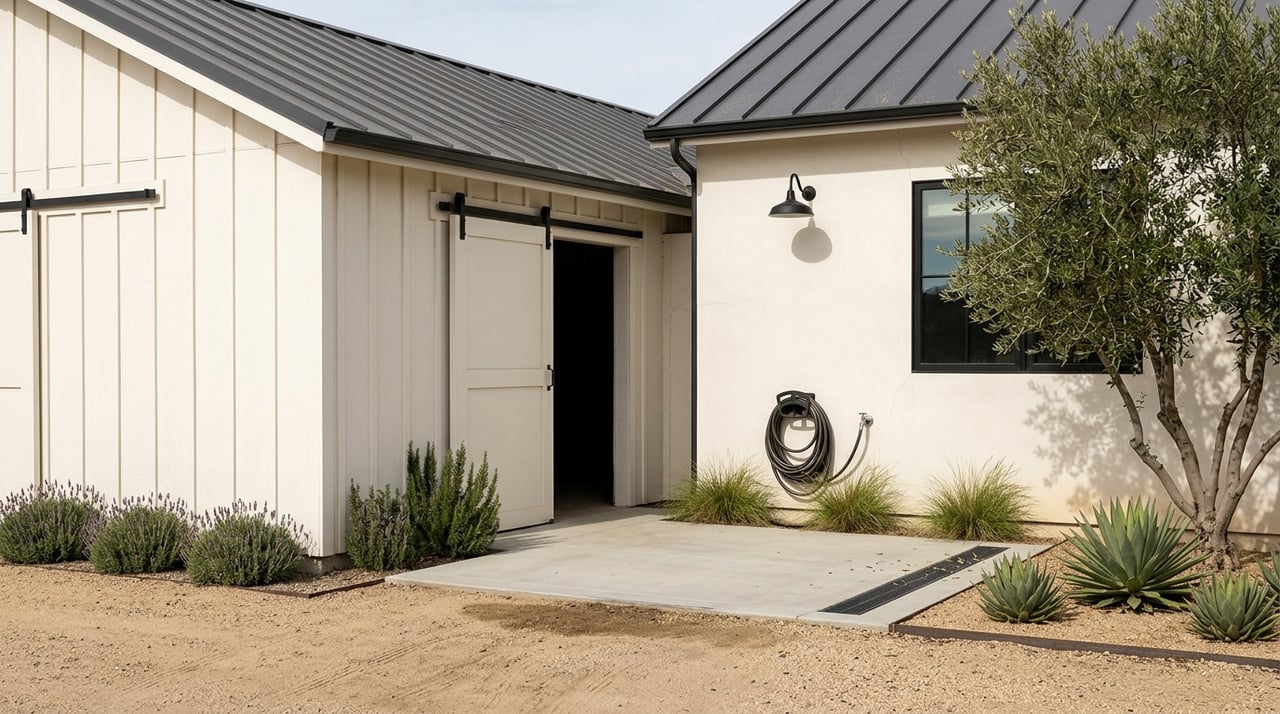
Wildomar Equestrian Properties Guide for Acreage Buyers
May 14, 2026
May 14, 2026
If you want room for horses, trailers, corrals, or simply a little more space to spread out, Wildomar can be an appealing place to look. But buying small acreage or equestrian property here is not the same as buying a home in a typical subdivision. A parcel may look perfect online and still have limits that affect animals, utilities, access, or resale. This guide will help you understand what to check before you buy so you can move forward with more confidence. Let’s dive in.
Wildomar has a long-standing mix of older homes, horse properties, acreage, and newer neighborhoods. The city describes itself as about 24 square miles and positioned between Murrieta and Lake Elsinore, which helps explain why it attracts buyers looking for a little more land without leaving the area’s main growth corridor.
Just as important, Wildomar’s planning framework still includes rural-residential and estate-density areas. The city’s 2024 general-plan materials describe estate-density residential areas as 2- to 5-acre parcels with limited agriculture, while rural-community areas are intended for more intensive equestrian and animal-keeping uses.
That matters because Wildomar is not simply suburban housing with oversized backyards. In some parts of the city, the land-use pattern is intended to support a horse or small-acreage lifestyle. Still, every property is different, and the exact rules depend on the parcel’s zoning and land-use designation.
When you shop for small acreage or horse property, the first question is not how pretty the land looks. The first question is what the parcel legally allows.
Wildomar’s current Development Code says the agricultural and rural-residential zones R-A, R-M, and R-R allow noncommercial animal keeping and grazing. The same code also says commercial stables and riding academies are conditional uses, which means they are not automatically allowed just because a property has land.
Minimum lot size also matters. The code sets a half-acre minimum in R-A and R-R, while R-M requires 10 acres.
That is why it is smart to verify the parcel in the city’s Planning Department GIS tool and zoning map before you get too far into a purchase. A home marketed as a horse property may still require a closer review of what is permitted today.
A one-acre lot does not always function like a full acre of usable horse space. Setbacks, easements, driveway layout, barn placement, fire access, and drainage can all reduce how much of the site actually works for your plans.
This is especially important on half-acre and one-acre parcels. On paper, the property may appear large enough for animals, but the practical layout may not leave enough room for corrals, turnout, storage, and safe circulation.
Wildomar’s animal-keeping rules apply citywide to domestic and farm animals, including horse stables, boarding, and riding academies. For equids, the city allows 5 animals per acre.
The code also requires horses, donkeys, and mules to be kept at least 100 feet from any street and 20 feet from any property line. Those spacing rules can have a big impact on how a site functions.
If you are also considering other livestock, the city has separate spacing standards for ruminants and camelids. The key takeaway is simple: the legal animal count is only part of the story. You also need a layout that works within the setback rules.
Older horse properties sometimes operate under legal nonconforming-use rules. In plain terms, that means a property may have a long-standing use that can continue even if the same setup would not be approved the same way today.
That is one reason due diligence is so important in Wildomar. Before closing, you should confirm whether the current animal use is permitted outright, conditional, or nonconforming.
One of the biggest differences between standard suburban homes and small acreage property is infrastructure. Wildomar says the city does not provide water or sewage services, and Elsinore Valley Municipal Water District is the local water and wastewater provider.
That means you should never assume every property will have the same utility setup. Some homes may connect differently, and some properties may rely on private systems.
For private systems, Riverside County Department of Environmental Health oversees wells and septic. The county states that permits are required for well construction, reconstruction, or destruction, and septic installation, repair, or modification requires an OWTS construction application in unincorporated areas and contracted cities. A new septic system also requires a building permit.
Before you buy, ask clear questions about:
These details can affect financing, insurance, ongoing costs, and your comfort level with the purchase.
In Wildomar, wildfire planning is not a side issue for acreage buyers. It is a central part of ownership.
The city states that Fire Hazard Severity Zone assessments influence building codes, defensible-space requirements, and real estate disclosures. The city also says that, beginning July 1, 2021, sellers of property in a high or very high Fire Hazard Severity Zone need documentation of a compliant defensible-space inspection.
Wildomar’s Safety Element identifies wildfire, wildland-urban interface fire, and structural fire as ongoing concerns. It specifically notes substantial fire risk in hillside areas east of Interstate 15 and near the Elsinore Mountains.
If you are considering acreage or equestrian property, review fire-related issues early in the process, including:
These items can affect both day-to-day ownership and future resale.
Acreage homes are often evaluated differently from tract homes. Fannie Mae guidance says the appraisal must support the property’s highest and best use, meaning the improvements need to be legally permitted, physically possible, and financially feasible.
The same guidance also says appraisers consider surrounding properties and conditions that affect marketability. In a niche segment like small acreage or equestrian property, that can matter a lot.
If public sewer and water are not available, Fannie Mae requires viable community or private well and septic facilities. It also expects legally binding access and maintenance agreements for off-site systems when applicable. In addition, the property should front on a publicly dedicated and maintained street that meets community standards.
Even if you are focused on lifestyle first, financing and appraisal standards can shape which properties are realistic choices. A parcel with unclear access, undocumented utility systems, or questionable improvements may create delays or limit loan options.
That is why experienced guidance matters on specialty properties. You want to know not just whether a home feels right, but whether it is likely to perform well through escrow and make sense again when you eventually sell.
The best small acreage properties usually tell a clean, practical story. They have legal animal use, clear access, understandable utility systems, and enough functional land for the improvements a buyer actually wants.
In other words, resale is not only about how much land you have. It is about how usable and documented that land is.
A future buyer may look closely at barn placement, turnout area, trailer parking, drainage, defensible space, and whether current uses align with the city code. In a niche market, that extra clarity can make a property more attractive.
If you are serious about buying small acreage or equestrian property in Wildomar, focus on these items before removing contingencies:
Buying this kind of property can be incredibly rewarding when the land actually supports the way you want to live. With the right due diligence, you can avoid surprises and choose a property that works both now and later.
If you are exploring Wildomar acreage, horse property, or another specialty home in Southwest Riverside County, Kim & Isaiah can help you look beyond the listing photos and focus on the details that matter most.
Stay up to date on the latest real estate trends.
Etiam non quam lacus suspendisse faucibus interdum. Orci ac auctor augue mauris augue neque. Bibendum at varius vel pharetra. Viverra orci sagittis eu volutpat.